A fisher leaves shore before dawn, pushing off into waters that carry more than the day’s catch. In the West Philippine Sea (WPS), every trip can mean livelihood, survival, and risk all at once, and that reality is too often lost in the noise of diplomacy and confrontation.
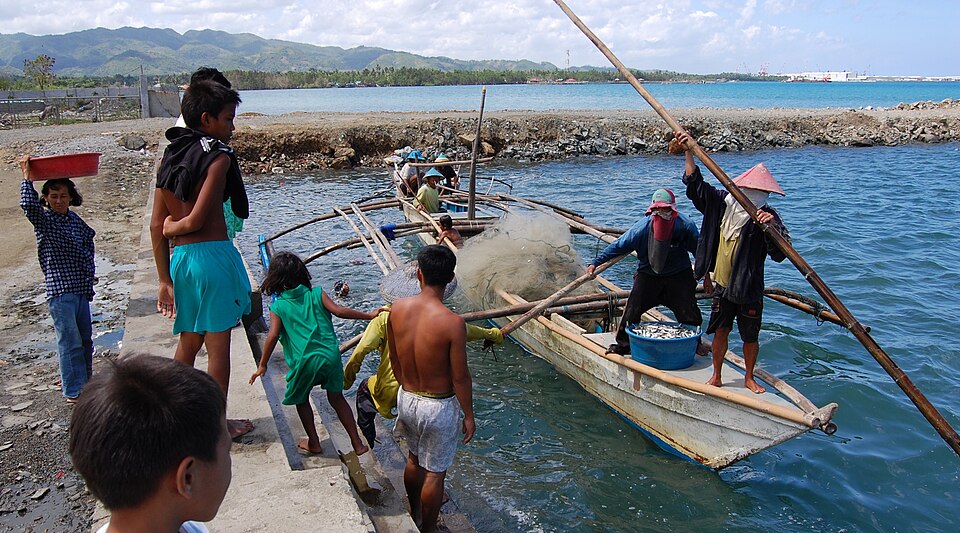
Fisherfolk unload their catch as children gather along the shore in a coastal community in the Philippines (Wikimedia)
The dispute over the WPS is usually told through the language of patrols, legal claims, and national security. That framing is understandable because sovereignty matters, and the stakes are undeniably high. But it also narrows the story into a contest between two states, as if the sea were only a strategic chessboard and not a living place where people work, remember, and survive. When public debate focuses almost entirely on official statements and security responses, it can miss the human cost that unfolds far from press conferences and embassy posts.
Lost beneath these geopolitical narratives is another reality. National conversations about the WPS often overlook the coastal and Indigenous communities whose livelihoods, cultures, and identities are rooted in these waters. Fisherfolk are frequently mentioned as beneficiaries of policy or as images in news reports after an incident, but rarely as central voices in shaping the nation’s understanding of the dispute. Indigenous and coastal traditions tied to the sea are treated as background, when they should be recognized as part of the country’s broader story of sovereignty and belonging.
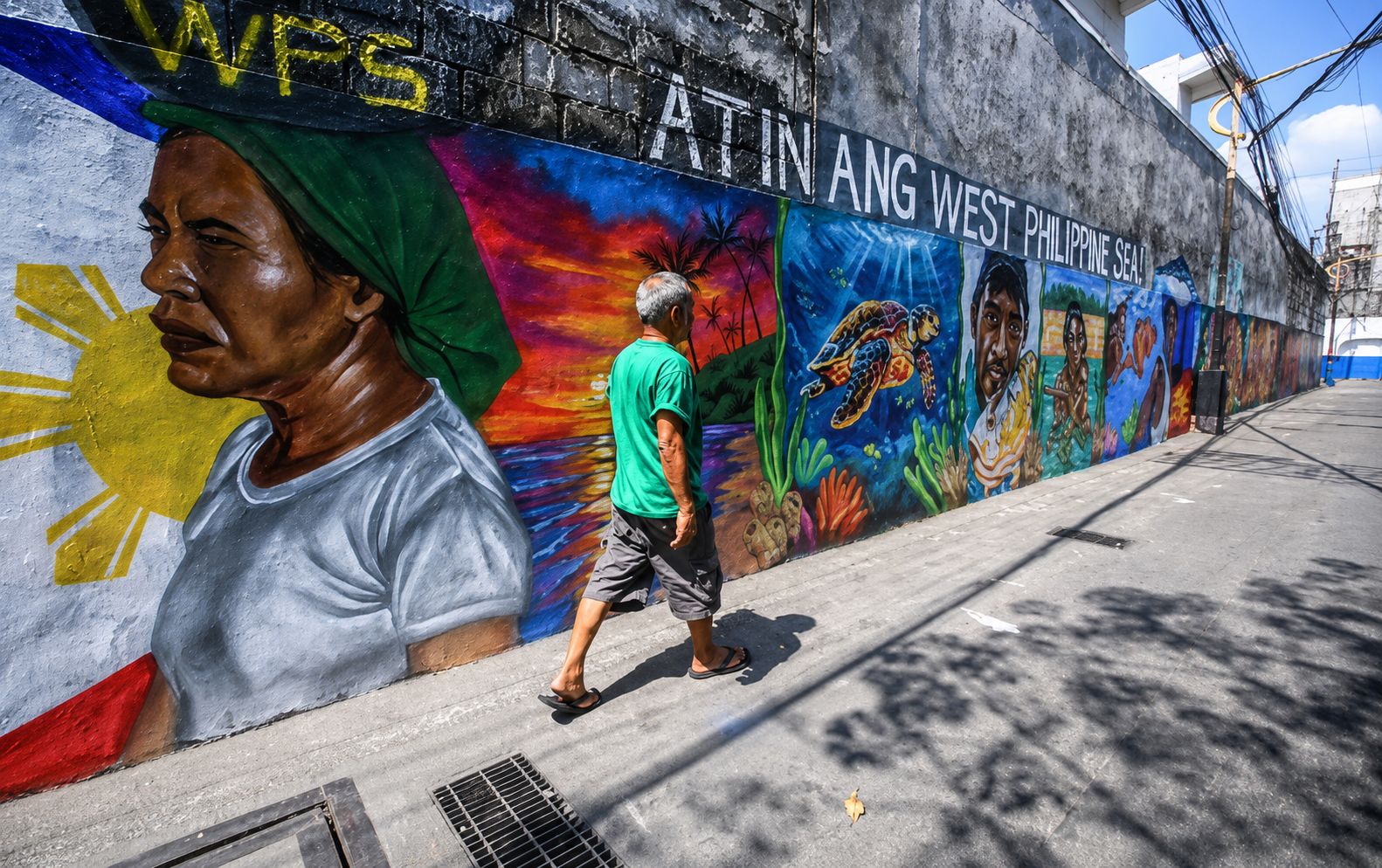
A passer-by walks past a mural depicting the West Philippine Sea (Philippine News Agency)
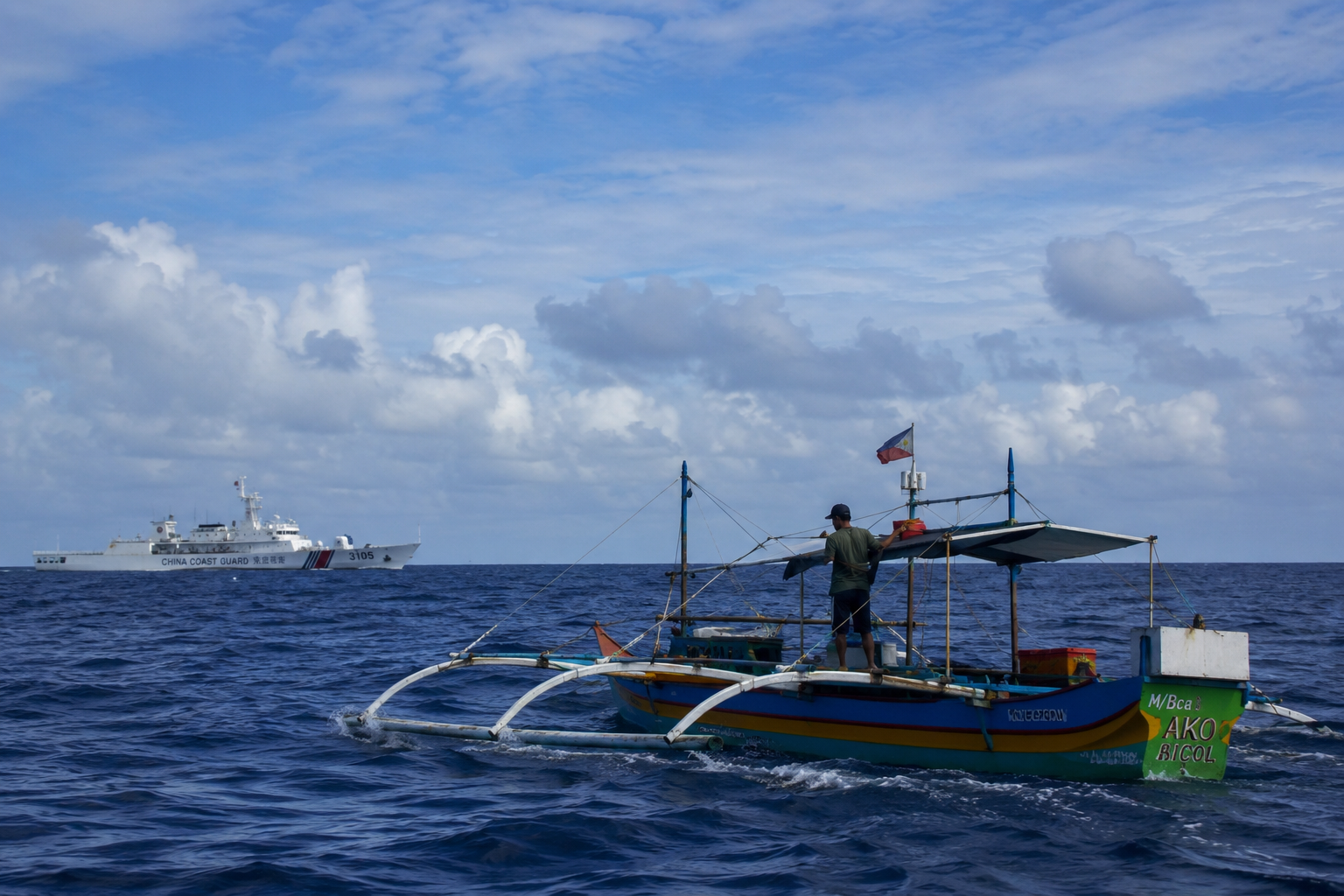
Every collision at sea produces two stories. One comes from official press briefings. The other unfolds quietly in fishing communities, where a damaged boat can mean weeks without income. Each side frames events in language that serves its own position: restraint, legality, and stabilization on one hand; harassment, intimidation, and injury on the other. These competing messages matter because they influence how citizens judge the conflict and how the international community interprets it. They can clarify a country’s position, mobilize public support, and strengthen diplomatic claims. But they can also flatten reality. A damaged boat becomes a talking point. An injured sailor becomes a statistic. A disrupted fishing trip becomes a brief headline before the next statement arrives. That distance between narrative and lived experience is where many Filipinos find the greatest frustration. For people far from the sea, the conflict may seem like a matter of foreign policy alone. For those who rely on the water, it is immediate and personal. Every incident at sea can mean fewer fish in the market, more debt at home,a damaged vessel, or a family meal that becomes harder to afford. The impact is not limited to the fishermen who go out before dawn. It reaches their spouses, children, boat operators, fish vendors, and entire coastal communities whose local economies depend on the WPS’ productivity.
For fisherfolk, the conflict is not abstract at all. It is the rising cost of fuel, the fear of being chased away, the possibility of returning home with nothing, and the heartbreak of risking injury just to keep food on the table. Many of these men and women are not seeking politics; they are seeking survival. Their work is already physically demanding and economically uncertain. Add harassment, dangerous maneuvers, and restricted access to traditional fishing grounds, and the burden becomes even heavier. The result is a cruel paradox: those who depend most on the sea are also those most likely to be pushed away from it.
For Indigenous communities, the sea is more than a workplace. It is part of memory, practice, and belonging. Sustainable maritime traditions, local ecological knowledge, and cultural inheritance are all tied to access and continuity. Reefs, shoals, and fishing grounds hold stories about the past and responsibilities to the future. When these spaces become militarized, contested, or unsafe, the damage is not only economic. It is cultural and spiritual. What is threatened is a way of life passed from one generation to the next. This is why their perspectives should inform discussions on sovereignty, security, and policy. People who live
closest to the issue often understand its practical realities best. They know the currents, the seasons, the risks, and the fragile balance between work and danger. They know what it means when access is blocked, when catches shrink, or when fear keeps boats in harbor. A serious national conversation cannot treat them as side characters in a dispute that shapes their future.
Their knowledge is not anecdotal, it is essential. Including these voices also makes policy stronger. Decisions about maritime defense and diplomacy are often made in highly technical language, but the effects are lived in ordinary homes. Policies that ignore fisherfolk and Indigenous communities may succeed on paper while failing on the ground. A government can defend a legal claim and still neglect the people who give that claim meaning. That is why sovereignty should be understood not only as control over territory, but also as responsibility toward the people who depend on that territory for life and identity. Of course, national security decisions are complex. The government must weigh international law, deterrence, alliances, and the risk of escalation. It cannot act on emotion alone, and it cannot afford to underestimate the seriousness of the dispute. But complexity should not become a reason to exclude the communities most affected by the outcomes. Their voices do not weaken the national interest. They ground it in human reality and keep it connected to the people it is meant to protect.
In the end, the WPS is not just a geopolitical arena. It is a living cultural landscape where labor, memory, and identity meet the water. Protecting sovereignty means more than defending territory on a map. It also means safeguarding the people whose lives, histories, and futures are rooted in the sea. If the country is to speak honestly about the WPS, it must listen not only to soldiers, diplomats, and officials, but also to the fisherfolk who leave shore before dawn and the communities who depend on their safe return. Tomorrow, before sunrise, thousands of Filipino fishers will once again leave shore. Long before governments issue another statement or diplomats meet around another table, they will already be at sea. If sovereignty is ultimately about protecting people, then their lives—not just the maps they sail across—must remain at the center of the conversation.