Faith In Music, Faith in Sound: Fête de la Musique’s Expansion into Wellness
Wika · Culture · June 16, 2026
In a world that demands we always be "on," sound healing is teaching us the transformative power of simply stopping to listen.
What does it mean to really listen to music? Not as background noise that plays while you do something else or a way to hype yourself up, but as the entire point. As the thing that, if you let it, can and will transform something inside you. That’s the question sitting at the center of Music Heals, the wellness arm of Fête de la Musique Philippines. It also reflects a broader shift in how the festival is evolving: beyond stages and crowds, into quieter rooms where sound is not performed but experienced.
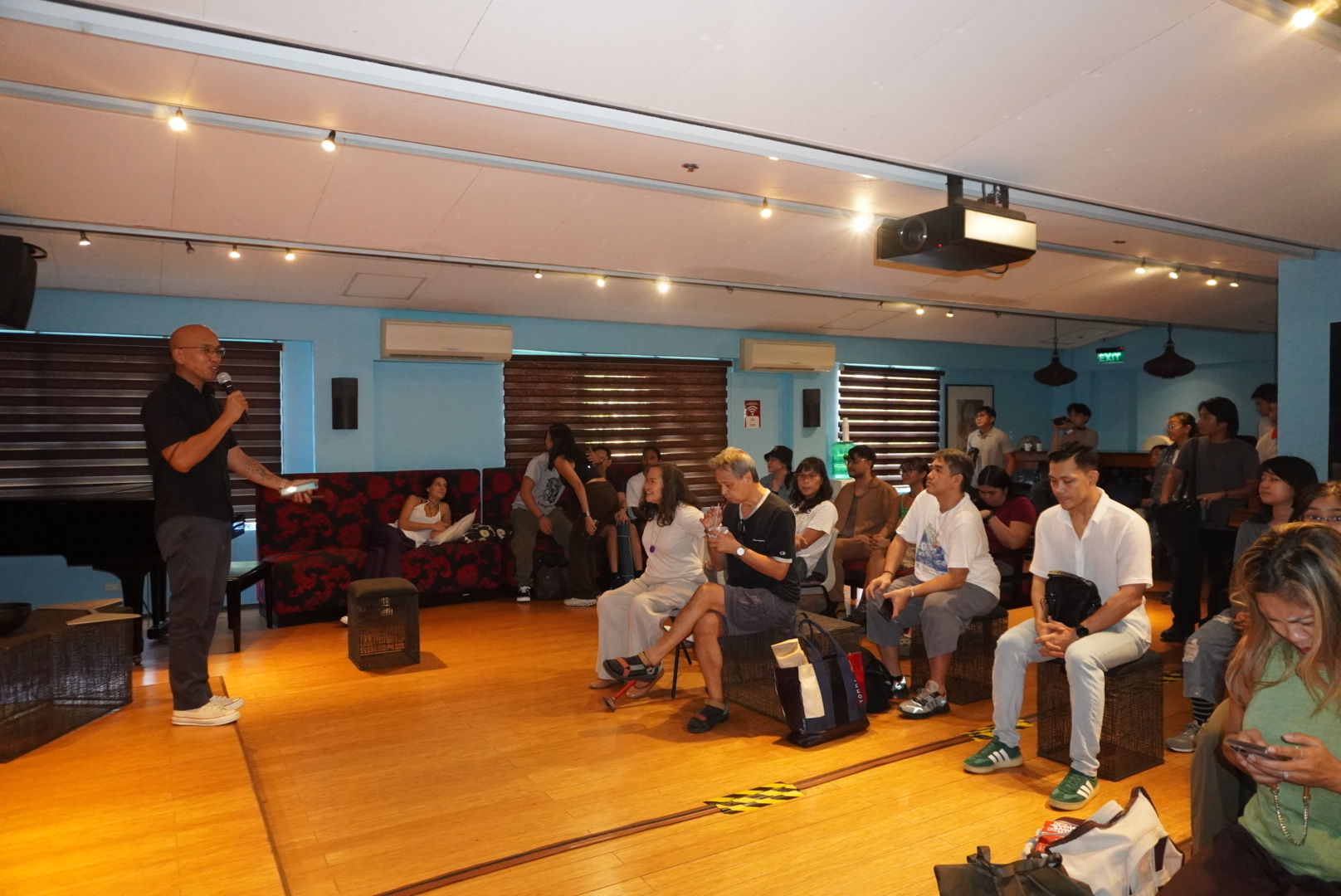
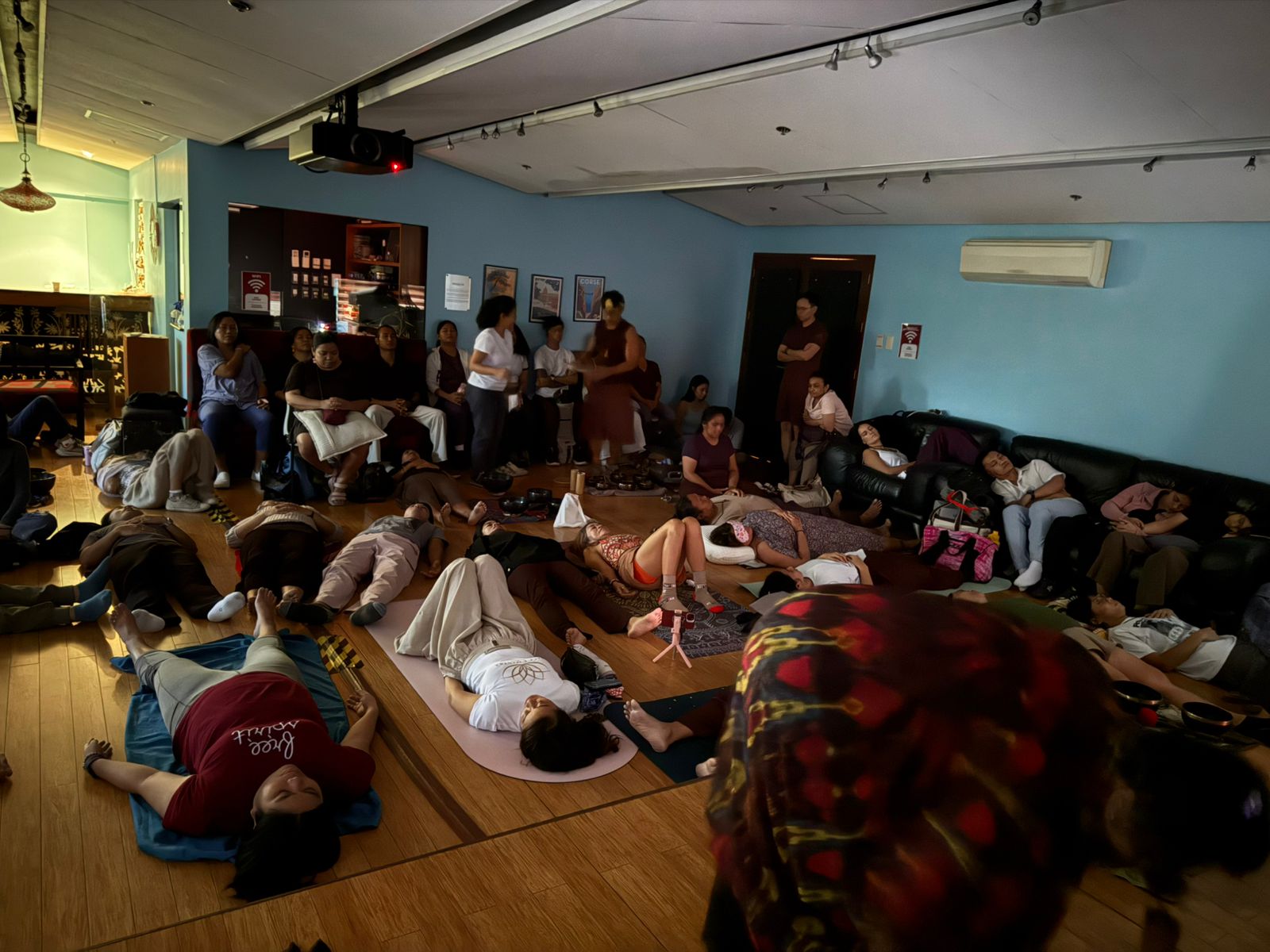
Last June 10 at Alliance Française de Manille, before the performances and the crowds, a room full of people lay down, closed their eyes, and let the sound find them. Fête de la Musique is now in its 32nd year in the Philippines, and in recent years, it has begun to hold space for experiences like this. Music Heals, led in partnership with Aruga Collective, is part of that expansion.
Carlo Sumaoang, a sound healer from Aruga Collective, describes it as a natural convergence. "Fete is really anchored on sound, and we are doing sound healing," he says. "The merger of those two is really meant to be." Metro Manila's wellness landscape has been evolving for years, and sound healing is slowly appearing in more spaces. Music Heals itself isn't new to Fête, but Aruga Collective’s version is a significant rebuild.
The earlier iteration was more immediate and immersive, but lacked what Sumaoang calls “scaffolding.” He redesigned it from the ground up with a more gradual entry point: starting with what people already recognize, then slowly deepening the experience. It was built for people who had never done anything like it before. "You don't do much in sound healing; you're just lying down," Sumaoang says. "It's a lot easier jump-off point."
The program moved through a series of learning sessions across the afternoon, from pranayama to sacred incense and sound healing, before culminating in the fi nal collective sound bath. Multiple sound healers played together until the room was full of something hard to describe in words, something that one could only truly feel. Sumaoang appreciated how one participant described her expectation of chaos: overlapping noise and competing instruments. Instead, she heard something unifi ed, as if the sound healers were truly a single organism.
It was also midyear, and that timing wasn't lost on Sumaoang. He spoke of how people came in carrying six months of whatever 2025 had handed them, and the session gave them somewhere to set it down. Many shared afterward that they'd released things they hadn't realized they were still holding on to.
To understand why Fête de la Musique has ventured into this space, Sumaoang says we need to look at how the last six years have changed people. The pandemic took away the rhythm of gathering and the simple feeling of being near other humans. Although we felt relief when it was over, the world waiting on the other side wasn't gentler. We became more uncertain, more fractured, more relentlessly present on every screen. Sure, music is more accessible than ever, but often less deeply heard.
People aren't showing up to wellness spaces because it's trendy, Sumaoang says, but because they are overwhelmed. People are genuinely overstimulated and desperately yearning for a space where they can just be. It's also why authenticity has become such a loaded word right now. When everything is curated and optimized, the things that feel genuinely unmediated carry outsized weight. Sumaoang keeps coming back to one idea: showing up is most of it. "The act of choosing is already 80 percent of taking care of yourself," he says. And that small act of choosing, practiced enough, stops being small. The sound healers at Aruga Collective believe that the work is done when they encourage people to feel comfortable enough to continue choosing themselves.
Carlo’s own path into sound healing was indirect. Before the bowls and gongs, there was incense, meditation, and years of listening to music on headphones without yet having the language for what he was searching for. He became a DJ chasing that feeling. He eventually studied under Tonette Asprer, who had been practicing sound healing long before it was fashionable.
Since then, he started facilitating his own sessions and watched things happen he just couldn't explain. People weeping, seeing colors, and feeling transported to different places. Something loosening in the body that had been held tight for longer than anyone could account for.
"For things that you cannot explain, what you can do is have faith in it," he says.
For Carlo, music is no longer just stimulation. It had the capacity to put him in that fl ow and to help him realize so much about himself. It has become a way of returning to stillness, and a tool for understanding experience beyond language. That is part of what allures him to Fête de la Musique: a festival built entirely on music, now expanding into what sound can do beyond performance. Aruga Collective currently places sound healers in yoga studios across Metro Manila and continues to grow its community of sound healers. The relationship with Fête de la Musique is ongoing, and the results are already visible. People who showed up to last year's Music Heals have since found their way into Aruga Collective's regular spaces, deepening a practice
that started with a single afternoon on the fl oor. Thirty-two years in, and the festival is still fi nding new ways to mean something. That might be the most Fête thing about any of this: the understanding that music isn't one thing and that there are as many ways to be moved by sound as people are willing to stop and actually hear it. Music Heals is one answer to the question of what listening to music really means. And judging by how many people walked out of the session wanting more, it's an answer that's resonating.
Aruga Collective will host its own wellness festival, “A Midyear Bloom of Sound,” on June 28, 2026, at Parc Residences, San Juan. Fête de la Musique Philippines will also continue its celebration on June 20, 2026, at the Ayala Triangle Gardens, with pocket stages and performances unfolding across the country throughout the month.