A Home Woven From Hope
Wika · Culture · July 4, 2026
For Kandama Social Enterprise, a new weaving center is more than a building – it is a promise kept.
There is a kind of patience embedded in weaving. In the careful over-under of thread and loom, in the weeks it takes to finish a single piece, in the hands that have held this knowledge for generations. Weaving demands a faith that what you are making will still matter when it is done.
For the weavers of Lih'han Di Immipugo in Kiangan, Ifugao, that faith was tested. For a time, their workspace sat on borrowed ground, a church property offered generously but never guaranteed. When word came that they might be asked to vacate the space, the question was no longer just practical. It touched something deeper: what happens to a tradition when it has nowhere to stand?
In June 2026, that question found its answer. In a ceremony marking the culmination of more than a year of fundraising and coalition-building, the land for a permanent weaving center was formally turned over to Kandama Social Enterprise. Founded by Victor Baguilat, the collective has long worked at the intersection of culture and livelihood, ensuring that indigenous weaving in Ifugao is not merely preserved behind glass but passed forward through practice.
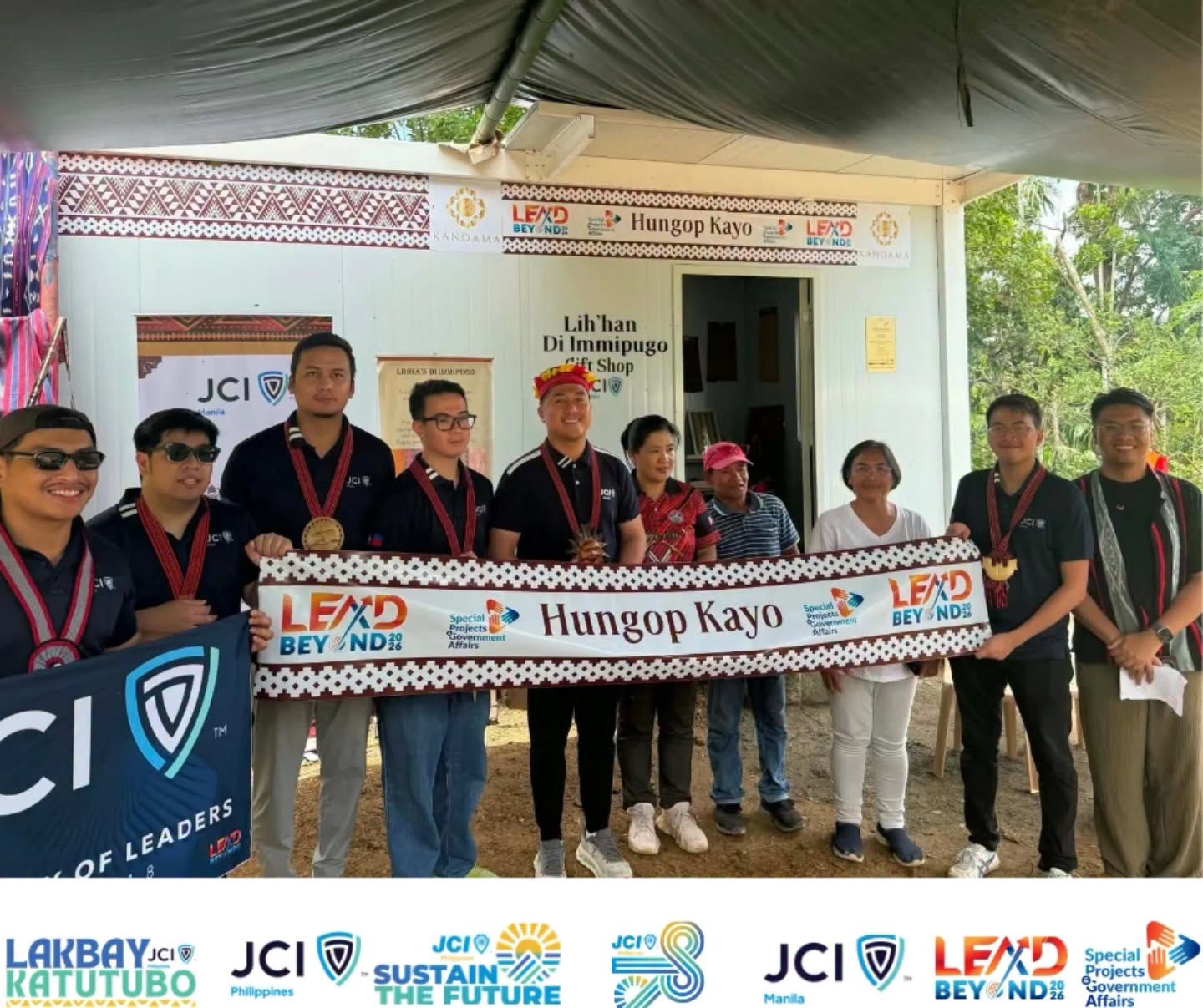
The turnover marks a signifi cant milestone for a campaign launched more than a year ago. While the weaving center itself has yet to be constructed and fundraising efforts remain ongoing, securing the land transforms the project from aspiration into reality. For the weavers and their supporters, it is tangible proof that years of planning AND community support are beginning to bear fruit. The project, supported by JCI Manila and other partners, fulfi lls a long-standing commitment to provide the community with a permanent space where traditional weaving can continue to thrive.
Beyond providing a physical workspace, the project aims to address broader challenges. Across indigenous communities in the Philippines, younger generations leave in search of better opportunities elsewhere. The logic of leaving for work is so familiar that it hardly registers as a loss anymore. What Kandama has quietly argued, and what the creation of a new center now embodies, is a counter-proposal: that staying can be made viable and dignifi ed. That the terraces you grew up beside can remain the center of your life, not the backdrop you left behind.
The evidence of this arrives in small, unglamorous ways. Families have renovated homes. Children have gone to university. One, whose schooling was funded entirely by weaving income, is now a police offi cer. These are not headline-ready statistics. They are the texture of a community that, thread by thread, is remaking itself. In remote mountain communities where access to resources can be limited, economic empowerment strengthens families and communities in meaningful ways.
The center is designed to hold more than looms. Alongside the workshop, a gift shop will offer weavers a direct line to market. Educational programs are also in development, and a cultural immersion initiative, supported by a grant from the National Commission for Culture and the Arts (NCCA), will bring indigenous youth from communities beyond Ifugao into conversation with one another. The center will also support The Exceptional Young Indigenous Leaders of the Philippines (TEYIL), a program that channels that energy into weaving, dance, and music. Rather than simply teaching these traditions in a classroom, the program aims to immerse young people in living cultural practices, allowing them to learn directly from community members and tradition bearers.
In Philippine fashion and design, there is a growing appetite for work with real provenance. The weavers of Lih'han Di Immipugo have always had that story. What they have now, at last, is permanent ground from which to tell it.