
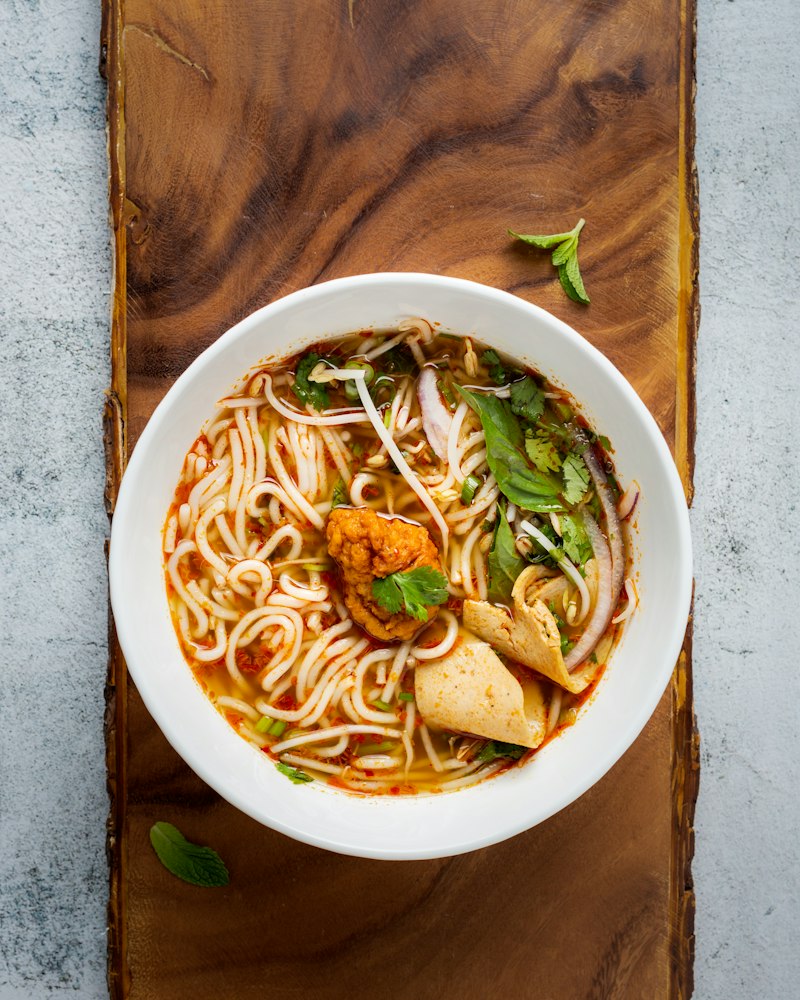
To eat in Hanoi's Old Quarter at six in the morning is to participate in something ancient and ongoing. The women who set up their low plastic stools and fold-up tables on the same stretch of sidewalk every dawn are not operating restaurants — they are maintaining a practice that connects this meal, in this form, to generations of the same meal, in the same form, stretching back further than anyone can trace with certainty.
The Pho Question
Food historians argue productively about pho — when it emerged (probably early twentieth century), where (the north, most likely, with significant French colonial influence on the broth technique), and how it became the national dish of a country with a food tradition of extraordinary diversity. What is not disputed is what pho does: it provides comfort, it provides protein, it provides warmth, and it does so at a price point accessible to people across the entire economic spectrum of Vietnamese society. This democratic reach is central to what makes Vietnamese street food a genuine cultural institution rather than merely a tourist attraction.
The broth of a Hanoi pho bo — made from beef bones roasted and then simmered for hours with charred ginger and onion, star anise, cinnamon, and cloves — represents a technical achievement refined over generations. Its subtle complexity rewards attention. The best bowls in Hanoi's back streets are made by women who have been cooking this specific dish, in this specific way, since adolescence. Their knowledge is not written down anywhere.


