In the middle of the Sulu Sea, accessible only by a 10-hour boat ride from Puerto Princesa, lies one of the last truly pristine marine environments on Earth. Tubbataha Reefs Natural Park — a UNESCO World Heritage Site since 1993 — is a 97,030-hectare sanctuary that supports over 600 species of fish, 360 species of coral, 11 species of shark, and nesting populations of sea turtles and seabirds that have been declining everywhere else in the world.
I boarded the patrol vessel M/V Embuyan at dawn on a Tuesday, joining a crew of rangers from the Tubbataha Management Office for a routine five-day patrol. What I experienced over those days was both inspiring and sobering — a masterclass in conservation done right, fighting against odds that seem, at times, overwhelming.
The park employs 14 park rangers who rotate through two remote ranger stations — one on North Atoll, one on South Atoll — in two-month stints. They live in basic but functional facilities, conduct daily reef monitoring dives, and intercept illegal fishing vessels that test the park's boundaries with regularity.
"Last year we apprehended 23 illegal fishing vessels," says park manager Angelique Songco, who has been protecting Tubbataha for over two decades. "Most were foreign vessels — Chinese, Vietnamese, Indonesian — but we also catch Filipino vessels from Mindanao and the Visayas. The penalties have increased significantly, which helps. But the fishing pressure is relentless."
What makes Tubbataha extraordinary is not just its biodiversity but its productivity. As one of the few no-take zones in the Coral Triangle, it serves as a "source reef" — a nursery and breeding ground whose surplus populations seed the surrounding seas with fish larvae. Scientists estimate that Tubbataha's protection benefits fishermen across hundreds of kilometers of surrounding ocean.
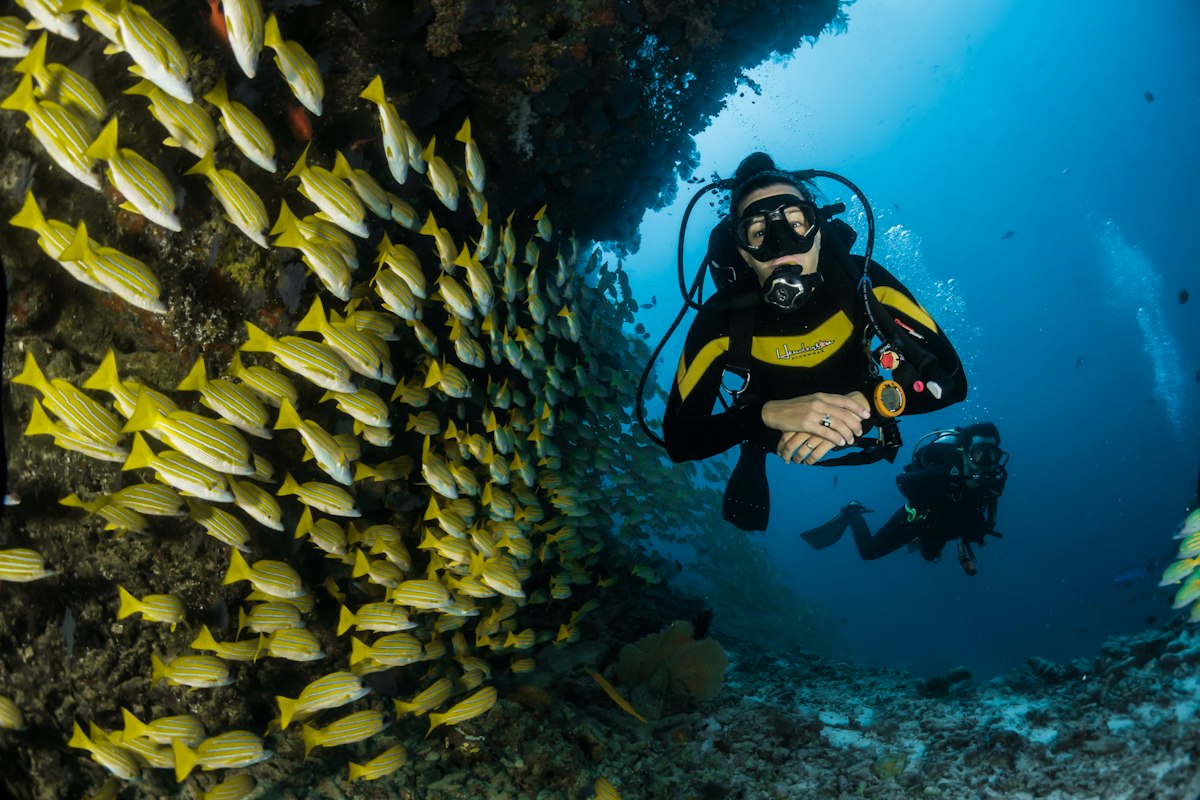
Below the surface, the reefs are breathtaking. On my first dive, I encountered a school of several hundred chevron barracuda circling in a perfect silver tornado, three different species of sea turtle, a bumphead parrotfish the size of a Golden Retriever, and more fish than I could count in the available daylight.
"This is what the whole ocean used to look like," says ranger Dante Baniaga, floating beside me in 30 meters of crystal-clear water. His face mask can't hide his smile.