There is something deeply familiar about the terno in the Filipino imagination. For many, it exists in carefully preserved photographs, formal occasions, and cultural ceremonies—beautiful, revered, and at times, distant from everyday life.
TernoCon: Palaro approached it differently.

Presented by SM Supermalls, Bench, and the Cultural Center of the Philippines (CCP), the latest edition of TernoCon transformed the FIFA-certified MOA Sky Football Pitch into an unexpected kind of runway. The choice of venue alone immediately shifted the atmosphere surrounding Filipiniana. Instead of stillness and formality, there was movement, play, noise, and energy. Heritage was no longer standing quietly in the background. It was running, performing, and fully participating in the present.
At the center of the show was a simple but important idea: tradition survives through evolution.

“Palaro” reimagined the terno through the language of sport and communal play, allowing Filipino heritage to feel lighter, more fluid, and accessible to younger generations. Filipiniana silhouettes appeared with sport-inspired details, relaxed structures, and contemporary materials—proof that cultural dress does not lose meaning when it adapts. If anything, it becomes more alive.
Six Filipino designers interpreted the theme through distinct perspectives shaped by both memory and modernity.
Hannah Adrias introduced bold, 1980s-inspired silhouettes that carried both confidence and youthfulness, while Glyn Alley Magtibay’s Intramurals drew from the familiar atmosphere of campus athletics, weaving native textures into pieces that felt tactile and grounded in lived experience.

Six Filipino designers interpreted the theme through distinct perspectives shaped by both memory and modernity.
Hannah Adrias introduced bold, 1980s-inspired silhouettes that carried both confidence and youthfulness, while Glyn Alley Magtibay’s Intramurals drew from the familiar atmosphere of campus athletics, weaving native textures into pieces that felt tactile and grounded in lived experience.
Jo Ann Bitagcol’s Liga softened Filipiniana through nostalgia and ease, offering silhouettes that felt relaxed and wearable. Len Cabili of Filip+Inna turned to the country’s enduring basketball culture in Basketball Parabola, translating movement and shared national identity into contemporary form.
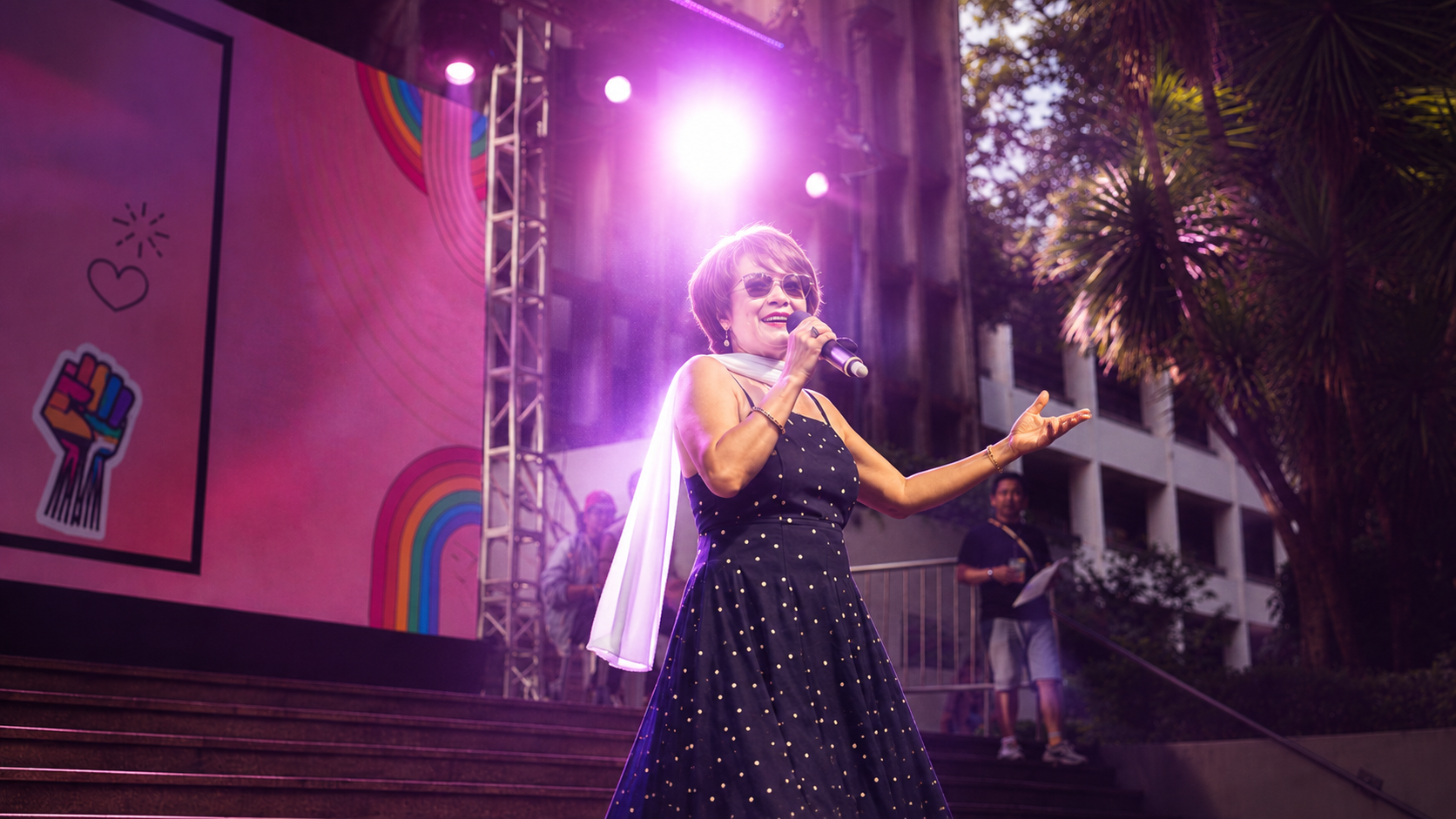
Beyond the collections themselves, the spirit of “palaro” moved through the entire experience. A marching band, cheerleaders, and even a referee animated the runway, dissolving the distance between audience and presentation. The show felt less like a spectacle to observe from afar and more like a shared cultural gathering unfolding in real time.
And perhaps that was what lingered most after the evening ended.
Not simply the garments themselves, but the feeling of witnessing heritage loosen its formality without losing its identity.
TernoCon: Palaro ultimately revealed something important about Filipino fashion: that tradition does not become relevant by remaining untouched. It remains relevant because each generation finds new ways to carry it forward.