
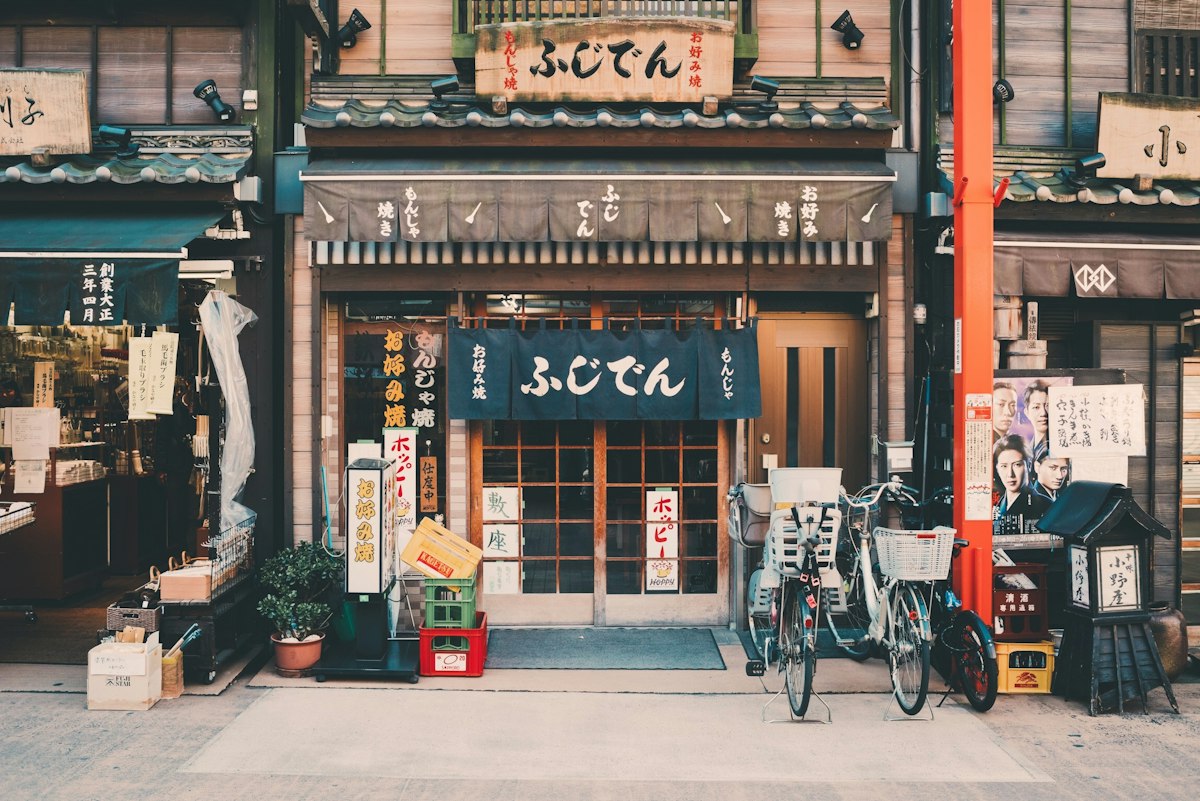
It is 2:47am in Shibuya. The streets outside are quiet save for the distant sound of a salary-man missing the last train. But inside the FamilyMart on the corner, the fluorescent lights are as bright as noon, the oden is simmering in its broth, the egg salad sandwiches in their triangular plastic packaging are perfectly fresh, and a woman in her twenties is making a payment on her electricity bill at the automated terminal near the door.
This is the konbini — the Japanese convenience store — and it is one of the most quietly extraordinary achievements of modern urban planning. There are over 55,000 of them across Japan, operated primarily by three chains (7-Eleven Japan, FamilyMart, and Lawson), and together they constitute something closer to public infrastructure than retail.
The food alone is an achievement. Konbini rice balls, or onigiri, come in dozens of varieties, each with a specific seasonal release schedule. The sandwiches are made fresh multiple times daily. Hot food counters serve fried chicken, nikuman steamed buns, and corn dogs with an efficiency and consistency that would shame many dedicated restaurants. The coffee — dispensed by machine, freshly ground per cup — has achieved genuine cult status.
But food is only the beginning. Konbini serve as payment points for utility bills, insurance premiums, concert tickets, and government fines. They provide photocopying, fax, and document certification services. They sell stamps, ship packages, and in some cases serve as polling stations. In disaster scenarios, they activate emergency protocols and become distribution points for essential supplies — a function they have fulfilled during multiple earthquakes and flooding events.
The design philosophy behind konbini is obsessive. Every square centimetre is accounted for. Shelf heights, product sequencing, the precise temperature of the food displays — all are the result of decades of iterative optimisation. Store layouts are standardised nationally but adapted to neighbourhood demographics with remarkable precision.
What other countries have failed to understand when attempting to replicate the model is that the konbini is not merely a convenience store. It is a social contract — a commitment that regardless of the hour, regardless of your circumstances, there will be a clean, safe, fully-stocked room nearby where your basic needs will be met with efficiency and without judgment.
When homesick Japanese expats describe what they miss most about Japan, the konbini comes up with striking frequency. Not the ramen, not the cherry blossoms — the corner store, open always, that asks only that you enter.


