There is a certain feeling that arrives in Manila every June—one that feels less like a scheduled event and more like a shift in atmosphere. Streets become louder in a different way. Music spills from unexpected corners of the city, pulling strangers into shared spaces they may not have entered otherwise.

Morobeats
Fête de la Musique has always carried that energy. But in its 32nd edition, the festival feels larger than ever—not only in scale, but in spirit.
Presented by Alliance Française de Manille alongside Funkybeat Entertainment and the Embassy of France to the Philippines, FêtePH2026 returns this June under the theme “For the People, By the People,” transforming the long-running French music tradition into a month-long cultural movement spread across Luzon, Visayas, and Mindanao.

Lola Amour
What began years ago as a single-stage event has evolved into something far more expansive: a network of communities connected through music, movement, and shared experience. And perhaps what makes it endure is precisely that openness. The festival remains entirely free, allowing people to move through it freely—without barriers, without exclusivity, without needing permission to belong.
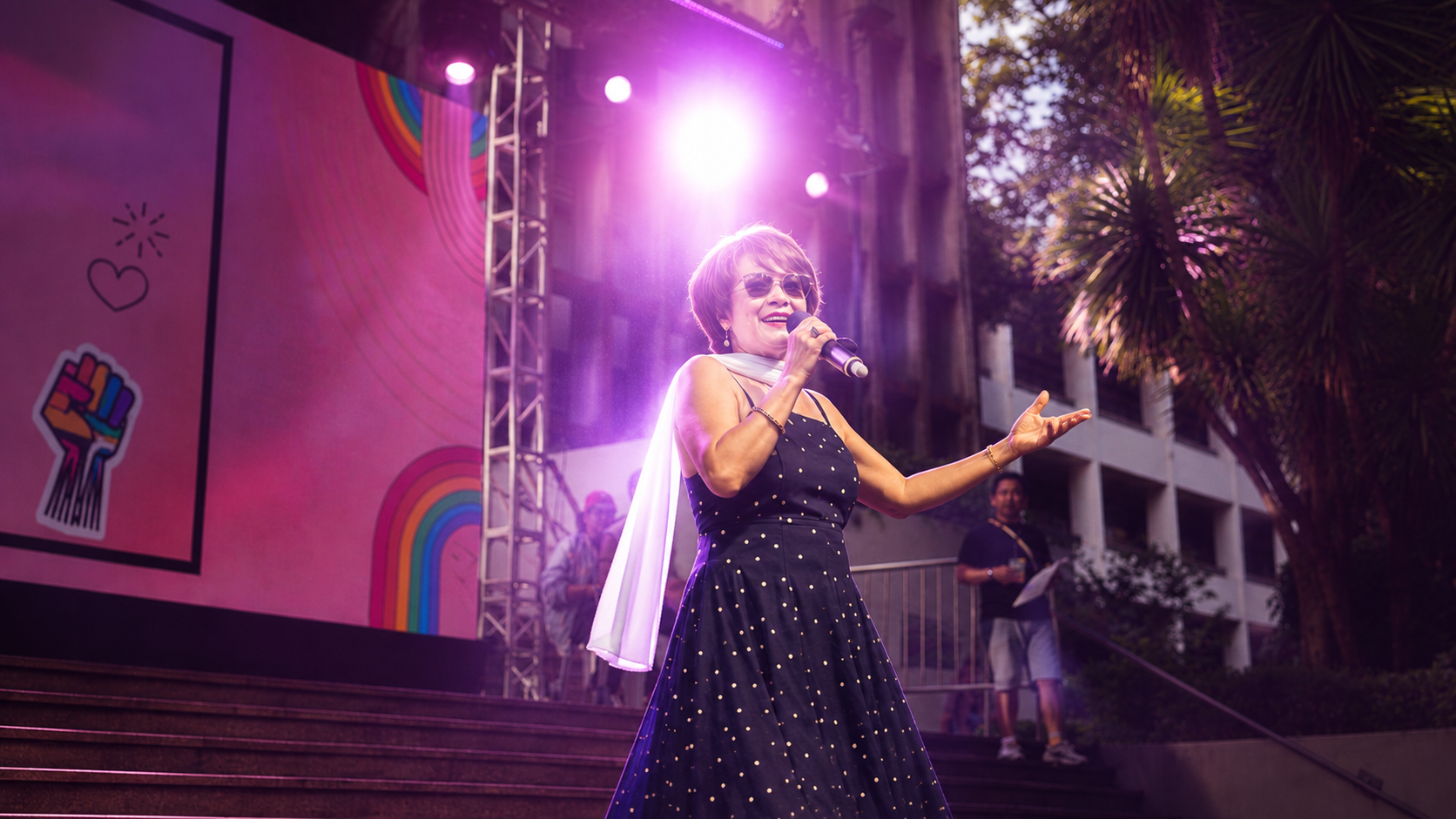
At the center of this year’s celebrations is the Main Stage at Ayala Triangle Gardens on June 20, integrated into the larger atmosphere of Makati Street Meet and the Makati City Fiesta. The lineup reflects the festival’s wide musical language: Lola Amour, Radioactive Sago Project, Morobeats, and the Jewelmer Jazz Band headline the evening alongside additional local and international acts still to be announced.

Meule
But what stands out about Fête is how easily music coexists with everything around it.
Across the June 20–21 weekend, Paseo de Roxas transforms through the Taste of France French Market, where French food, wine, and artisanal goods extend the experience beyond sound into something more sensory and communal. French krautrock trio Meule and French-Vietnamese harpist Héloïse La Harpe also join the festivities, bringing an international dimension that feels less imported and more integrated into the festival’s constantly evolving rhythm.
And still, Fête extends far beyond its headline performances. This year’s programming moves fluidly between wellness, education, and intimate performance spaces. “Music Heals,” the sound healing festival opening on June 10, explores music through restoration and therapy, while French pianist Maxime Zecchini brings a quieter, more reflective energy through performances at Raffles Makati and Alliance Française de Manille.
On June 19, the Asia–France Music Bridge Workshops gather artists, entrepreneurs, and cultural workers in Manila for conversations around intellectual property and creative growth—an acknowledgment that music communities are sustained not only by performance, but by the systems and people supporting them behind the scenes.
Then there are the Pocket Stages. On June 26, music disperses into smaller Makati venues, allowing audiences to encounter genre-specific performances in more intimate settings. Simultaneously, Fête spreads outward across the country through 23 NCR stages and 66 destination stages spanning Luzon, Visayas, and Mindanao, bringing the festival’s energy beyond Metro Manila and into regional communities.
And perhaps this is what defines Fête de la Musique most clearly now.
Not simply the performances themselves, but the idea of music as shared public space—something that moves freely between cities, cultures, and people.
A reminder that some of the most meaningful cultural experiences are not always the most exclusive.